Against the backdrop of the deep integration of environmental monitoring and industrial automation, Oxidation-Reduction Potential (ORP) — a core indicator characterizing the chemical properties of water bodies — is gaining growing attention across industries worldwide. Thanks to their outstanding anti-interference performance and networking flexibility, RS485 digital ORP sensors are playing a key role as water quality sentinels in various application scenarios around the world. From an international viewpoint, this article analyzes the practical application effects of RS485 ORP sensors in four typical scenarios.
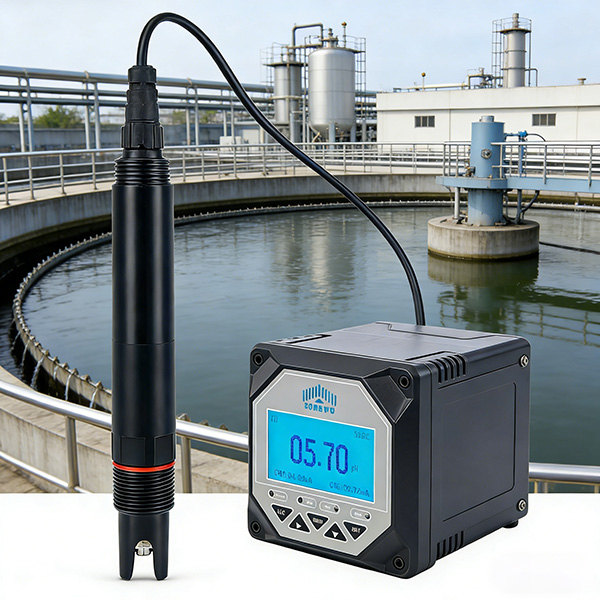
Scenario 1: Industrial Wastewater Treatment – Achieving Precise Process Control
In industrial wastewater treatment, ORP is a critical parameter for controlling chemical reaction processes. Precise ORP monitoring is required to guide chemical dosing, whether for the oxidative decomposition of cyanide-bearing wastewater or the reduction treatment of chromium-bearing wastewater.
Application Effects
In the sewage treatment facility of a large manufacturing enterprise, the adoption of RS485 digital ORP sensors enabled real-time monitoring of disinfection and oxidation processes. The sensors seamlessly connected to the plant’s data acquisition system via the Modbus RTU protocol, with configurable high and low alarm thresholds.
Actual Data
After six months of continuous operation, the sensors maintained 24/7 reliable stability, with readings highly consistent with manual sampling results. They feature low maintenance needs and only minimal calibration intervention. This not only improved the accuracy of process control but also significantly cut labor costs for manual sampling.
Scenario 2: Intensive Aquaculture – Improving Yield and Survival Rate
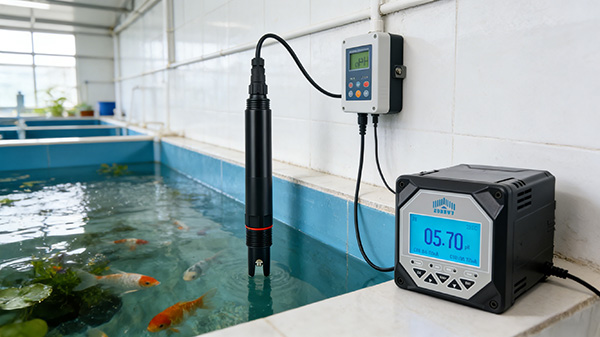
The global aquaculture industry is accelerating its shift toward high-density Recirculating Aquaculture Systems (RAS), where ORP has become an important basis for regulating dissolved oxygen, converting ammonia nitrogen, and suppressing pathogens.
Application Effects
RS485 ORP sensors can be installed in the center of aquaculture ponds or return pipelines and connected to water quality controllers via a bus. When ORP drops to the 200–300 mV range, the system automatically activates aerators or oxidant dosing equipment. Its galvanic cell structure avoids polarization drift issues of traditional electrodes, making it suitable for long-term submerged monitoring.
Actual Data
After deploying 12 sets of sensors at a tilapia farm in East China, dissolved oxygen fluctuations decreased by 35%, disease incidence dropped by about 28%, and annual per-mu yield rose by 12%. In a high ammonia nitrogen environment (<20 mg/L), sensor drift was less than 15 mV/month, performing far better than conventional silver-silver chloride reference systems.
Scenario 3: Environmental Monitoring & Surface Water Early Warning – Building Remote Monitoring Networks
In environmental monitoring for surface water and pollution discharge, ORP sensors are often key components of remote systems and must adapt to unattended harsh environments.
Application Effects
RS485 sensors with IP68 protection can be permanently submerged in rivers, inspection wells and other environments, withstanding a maximum water depth of 10 meters. Their digital signal output ensures distortion-free long-distance data transmission. Combined with solar power and IoT gateways, they support year-round maintenance-free operation.
Actual Data
In a cotton drip irrigation project in Xinjiang, sensors were installed at water well outlets, transmitting data through an RS485 bus connected to a LoRa gateway. The system promptly detected upstream sewage infiltration, avoiding salinization risks for thousands of mu of cotton fields. The average power consumption of the sensors is below 0.3 W, supporting solar + lithium battery hybrid power supply.
Scenario 4: Industrial Process Control – Adapting to Harsh Chemical Environments
In electroplating, pharmaceutical, chemical and other production processes, solutions are often strongly acidic, alkaline or oxidative, placing extremely high demands on sensor corrosion resistance.
Application Effects
RS485 sensors equipped with high-purity platinum electrodes and corrosion-resistant housings (e.g., PPS, 316L stainless steel) can work stably for a long time in cyanide-bearing, chromium-bearing and other industrial wastewater. The dual salt bridge design further enhances anti-interference ability, ensuring measurement accuracy in complex chemical systems.
Actual Data
At key points such as reaction kettles and discharge outlets, the sensors support 7–30V wide-voltage power supply and configurable Modbus addresses, facilitating system integration. Their fast response and high stability help technicians grasp the reaction endpoint in real time, reduce reagent waste, and improve production efficiency and safety.
Conclusion: Cross-Scenario Value Delivered by RS485 Technology
Across the four typical international scenarios above, the widespread use of RS485 digital ORP sensors stems mainly from their standardized Modbus protocol, high protection rating and intelligent automatic compensation functions. From municipal wastewater treatment in Europe, high-density aquaculture in Asia to industrial process control in North America, this technology is helping global users convert vague water quality signals into precise decision-making basis, driving water management toward greater efficiency and sustainability.https://www.zonewuiot.com/water-quality-sensors_c1


